Tag: netsforlife

  • ECW and NetsforLife

    \"\"

    At its heart, the NetsforLife campaign to eradicate malaria in sub-Saharan Africa is about the promise of the Episcopal Church to raise up the Millennium Development Goals and use them as a mission orientation. Of the eight goals, NetsforLife, an initiative of Episcopal Relief and Development, particularly focuses on goal six: “Combat HIV/AIDS, malaria and other diseases.” Malaria, which disproportionately affects women and children, is a scourge that can be prevented. One bed net costs only $12 and can protect up to three people from malarial mosquitoes.

    The ECW of North Carolina pledged itself in 2007 to the MDGs. In November 2010, in his “Lyin’ Midwives” homily given at Holy Trinity Church in Greensboro during the Annual Meeting of the ECW, Bishop Michael Curry asked that we continue to “lead the way” by working on behalf of NetsforLife (see the NetsforLife website for more information and to hear the bishop’s sermon.)

    The Diocesan ECW, represented by president Lisa Towle, was actively involved with the work of the NetsforLife Steering Committee. Individuals, parish-based ECW branches, convocations, and the ECW executive board donated a total of $7,200 to the campaign on behalf of the Diocesan ECW. That equals 600 mosquito nets. Translation: Up to 1,800 lives have been saved by this one financial gift.

     Many, many other Episcopal Church Women have contributed to NetsforLife by leading and contributing to campaigns in their churches. Heartfelt thanks to all! The work on behalf of the MDGs continues.

    \"\"

  • 9. Faith in Action

    Suppose a brother or sister is without clothes and daily food. If one of you says to him, “Go, I wish you well; keep warm and well fed,” but does nothing about his physical needs, what good is it? In the same way, faith by itself, if it is not accompanied by action, is dead.
    James 2:15-17 (NIV)

    The Mother’s Union, active throughout the worldwide Anglican Communion, is one of two primary women’s ministries in the Diocese of Botswana. The Episcopal Church Women of the Diocese of North Carolina has unique relationships with both these groups as they focus on different things at different times. Based on its name alone, the MU, as it’s commonly known, is concerned with conventional family life and strengthening it in a Christian context.

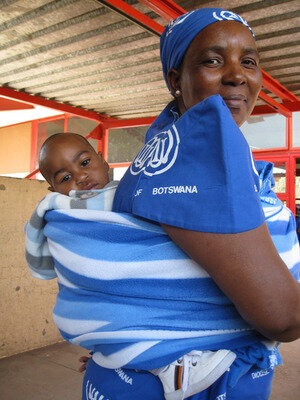
    The woman pictured here, carrying her son in the traditional way, attended the Diocese of Botswana’s annual MU conference in August of 2010. Mother and child had shy smiles and sweet dispositions, and both were endlessly patient with the long days of the conference, which ran nearly a week. Memories of them are such pleasant ones. But it’s people just like these who are the most susceptible to malaria: 90 percent of all malaria deaths occur in sub-Saharan Africa (a zone that includes Botswana), and malaria strikes women and children disproportionately. According to the World Health Organization, an African child has 1.5 to 5.4 episodes of malaria fever every year. The NetsforLife campaign of the Episcopal Church, which the Diocese of North Carolina has joined through its parishes, mission, schools, and ministries (such as Episcopal Church Women), asks that we put our faith in action by donating to the cost of at least one $12 mosquito net. Each net will cover one bed, and one bed holds up to three people. Prevention is much easier than a cure.